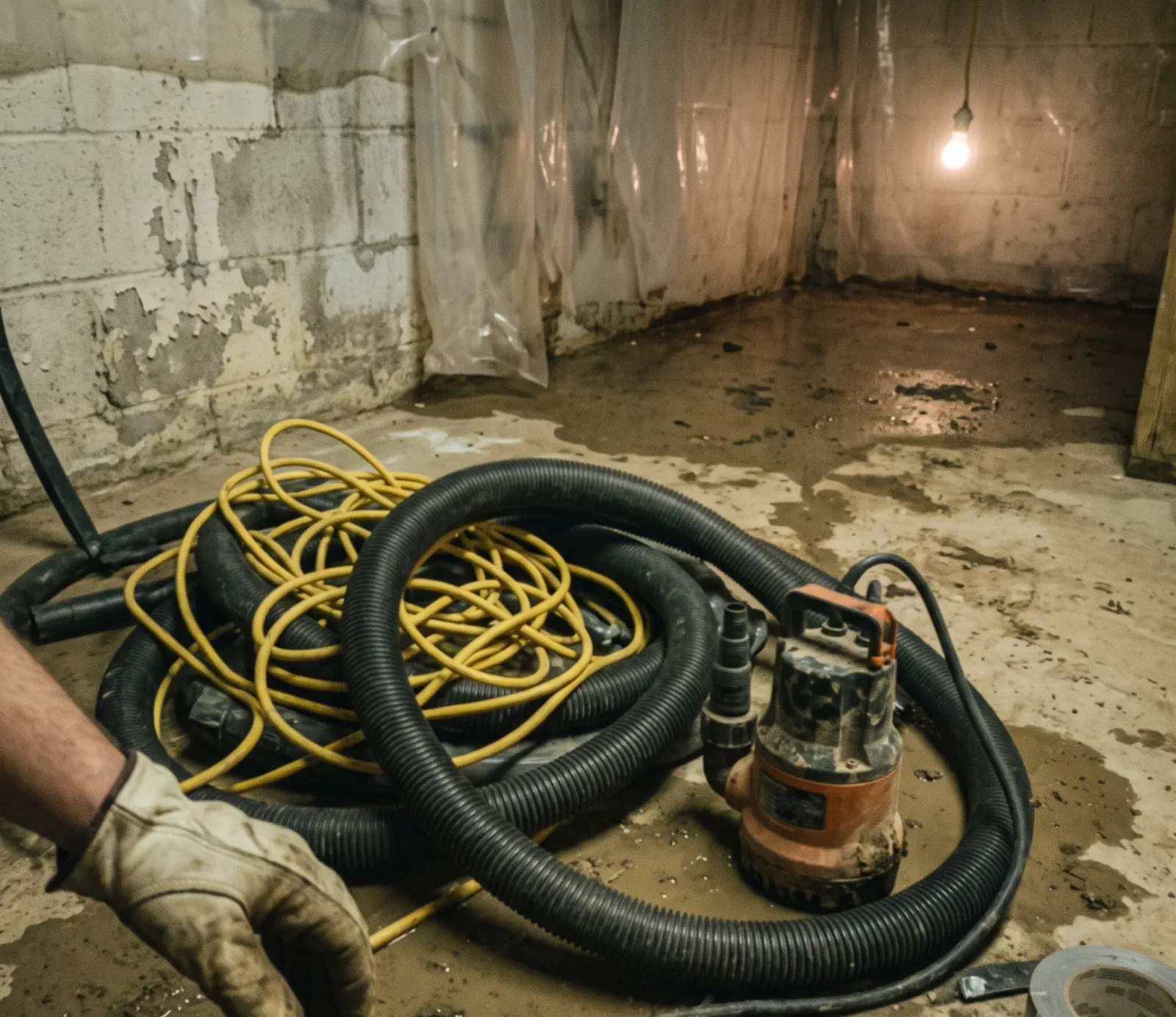
Submersible Pumps for Deep Water Across Tennessee
When deep pooled water fills a work area, a submersible pump can move it through a hose for standing water extraction.
Where possible, stop the source of incoming water before removal to limit further pooling. Shallow water or debris may call for another method.
Check the Area Before Placement
On a rainy day in Tennessee, you may find water covering a basement floor or a back room. A submersible pump is built to work beneath the water’s surface. The pros we connect you with look at the water’s depth, the affected area, and the available route for moving it outside. That first look helps show whether sustained pumping suits the site. Submersible pump water removal can move a large pool, but the equipment still has limits. The right choice depends on conditions they can see.
A pump’s intake must stay underwater to keep drawing water. In Tennessee, a broad flooded room may call for a different setup than one deep pocket. The pros we connect you with consider how much water may need to move and whether the unit can operate steadily. They also watch for changes as the water level drops. The sound of the pump and the visible flow offer clues about whether water is still moving through the line.
Placement starts with the shape of the space. A sloped floor, doorway, or stored items can affect where a pump sits and how easily someone can monitor it. In Tennessee homes and small businesses, the pros we connect you with check whether the unit has room around it and can reach the water. They consider how the hose will leave the room, too. Great Smoky Mountains National Park, Nathan Bedford Forrest State Park, and Fort Donelson National Battlefield are varied state landmarks; none determines pump choice at an address.
Read Depth and Pool Size
Once the pump starts, the discharge hose carries water away from the room. In Tennessee, the route depends on the property and the destination available there. A long or awkward path can affect setup and monitoring. The pros we connect you with look for a route that can carry the flow without kinks or interruptions. You can ask what destination the proposed setup uses and whether the hose can remain clear while the pump runs.
The water’s appearance matters before the pump goes in. Leaves, grit, or loose material can collect near an intake and slow the flow. In Tennessee, heavy rain, drainage trouble, and overflowing waterways are among the documented causes of flooding. The pros we connect you with can assess visible debris and decide whether the pump suits the water. As the pool drops, the intake may need to be repositioned to keep water moving.
As the water recedes, you may see isolated pools remain along low spots or beside obstacles. A standard pump may stop drawing once the remaining layer is too shallow for its intake. In Tennessee, that visible change can signal a shift in method, not a pump failure. The pros we connect you with can explain whether another suitable tool is needed for the last water. Ask which areas the equipment can reach and what remains outside its range.
Trace the Discharge Route
Water near outlets, appliances, or wiring changes what can be observed safely. In Tennessee, flooding may follow heavy rain or overwhelmed drainage, but the cause does not make a wet electrical area safe. The pros we connect you with need a safe way to power and monitor the pump. A stable footing and clear exit matter while the equipment is being set up. A clear view of the room is not enough to establish safe conditions.
A pump moves pooled water; it does not settle what happened to every wet material. In a Tennessee home, a damp baseboard or soft floor covering may remain after the visible pool is gone. At a small shop, wet stock can mark how far water reached. The pros we connect you with can describe the extraction area and note visible concerns. Items that can be lifted should be kept apart from wet surfaces while the area is assessed.
Recognize Shallow Water Limits
If the waterline barely changes or begins to climb during pumping, incoming water may still be feeding the space. In Tennessee, rain, a leak, or drainage conditions can keep water coming in while a pump removes it. The pump handles water that reaches its intake; it does not correct the source. The pros we connect you with can explain what they observe about the level and flow. Source attention is a separate matter from pump operation.
When reviewing a proposed setup in Tennessee, compare the observed depth, affected area, and expected volume. Then consider the hose route, destination, and what the pump may leave behind. Ask the provider to explain how those observations shape the equipment choice and written scope. Photos and a written description of water removal may help you share the work details with your insurer. Flood coverage and claim outcomes are not established by the pump or its use.
Details to Note Before Pumping
- Note the water’s visible depth, spread, and debris before discussing whether a submerged pump fits.
- Ask the provider to describe the hose route, discharge destination, and how the line will be monitored.
- Clarify whether shallow remnants, moisture checks, or drying equipment fall inside the written scope.
- Note whether the water forms a deep, continuous pool; isolated pockets or a thin film may call for different equipment.
- Record which rooms or work areas are affected and how far the pool extends; both shape the amount crews may need to move.
- Ask where the hose will carry the water and whether that destination is suitable before the pump is run.
Questions on Extraction
When might a submersible pump suit a deep pool of water?
The pros we connect you with assess whether a submerged unit can sit securely and keep its intake covered while moving the amount of water present. They also check the discharge route and visible debris. A deep pool across a room may suit sustained pumping; a shallow or obstructed area may call for another method. The equipment choice depends on those site conditions, not the state or town name.
What should I ask about where pumped water will go?
As the pool shrinks, the intake may no longer stay beneath the surface. Water can then remain in floor dips or along edges the pump cannot reach. The pros we connect you with can explain whether another tool is suitable for those remnants. Removing the visible pool does not include moisture assessment or drying automatically; clarify those items separately in the written scope.
Can debris or a thin layer of water limit pump use?
The hose carries discharged water to a destination chosen for the property. The route and endpoint affect where the pump can operate and how the line can be monitored. Ask the provider to identify the planned destination and explain how the hose stays clear during pumping. Conditions differ by site, so a destination that works for one property may not suit another.
Compare the water and route
Watch whether water continues to enter the space, and share that observation with the licensed pros we connect you with before removal begins.
Call (615) 281-3628